


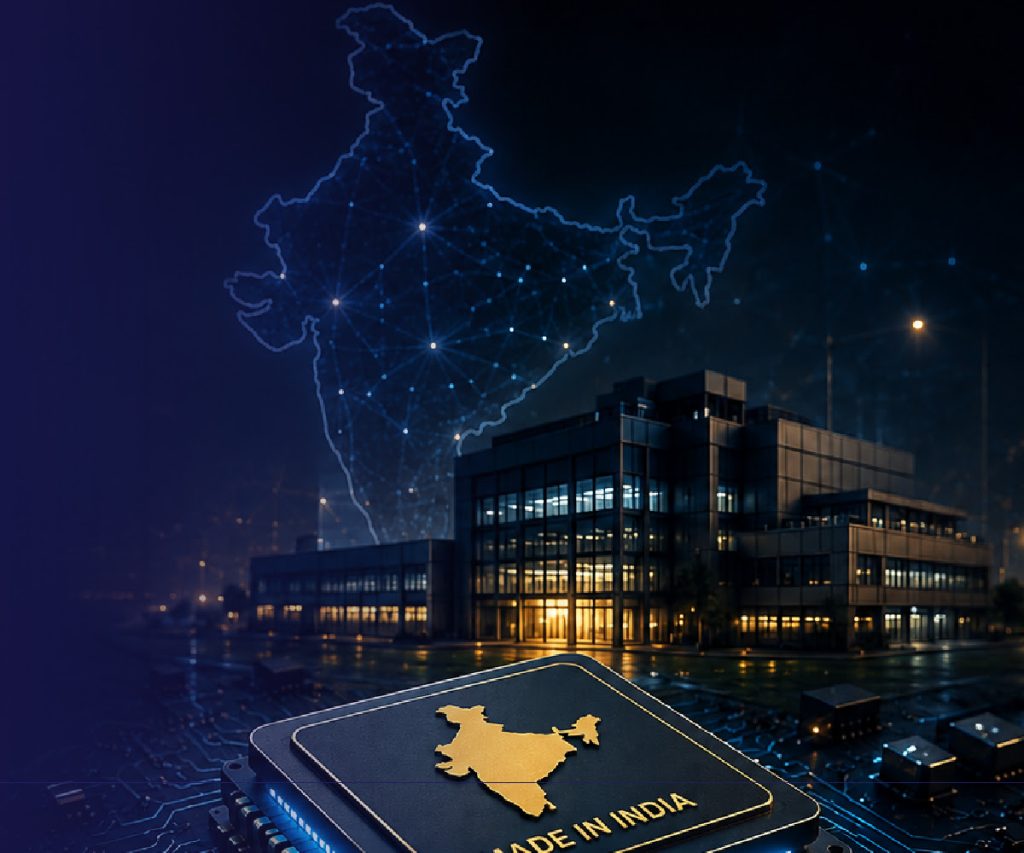
India’s Semiconductor Revolution: ₹3,936 Crore Push Signals a New Era of Growth and Investment
India is entering a transformative phase in its technological and industrial journey. With global supply chains shifting and countries racing to secure semiconductor independence, India is rapidly positioning itself as a serious player in the global semiconductor ecosystem.
In a major development, the Union Cabinet recently approved two new semiconductor projects worth ₹3,936 crore under the India Semiconductor Mission (ISM). These projects are not just manufacturing announcements — they represent India’s growing ambition to become a global hub for advanced technology, innovation, and electronics manufacturing.
For investors, businesses, and technology enthusiasts, this could become one of the biggest long-term growth themes of the decade.
India’s Big Semiconductor Push: What Happened?
On 5 May 2026, the Government of India approved two major semiconductor projects in Gujarat:
1. Crystal Matrix Limited (CML) – Dholera, Gujarat
CML will establish India’s first commercial Mini/Micro-LED display manufacturing facility using Gallium Nitride (GaN) technology.
The facility will produce:
- Mini/Micro-LED display panels
- RGB GaN Epitaxy wafers
- Advanced display solutions for electronics and automotive industries
These products are expected to be used in:
- Smart TVs
- Smartphones
- Tablets
- Automotive displays
- Smartwatches
- Extended Reality (XR) devices
2. Suchi Semicon Private Limited (SSPL) – Surat, Gujarat
SSPL will establish an Outsourced Semiconductor Assembly and Test (OSAT) facility.
The plant will manufacture:
- Discrete semiconductor chips
- Power electronics components
- Industrial semiconductor solutions
These chips are critical for:
- Electric vehicles (EVs)
- Industrial automation
- Consumer electronics
- Power management systems
Together, both projects involve investments of nearly ₹3,936 crore and are expected to create approximately 2,230 skilled jobs.
Why Semiconductors Matter So Much
Semiconductors are the foundation of the modern digital economy.
Almost every device today depends on semiconductor chips:
- Smartphones
- Laptops
- Cars
- AI systems
- Defence equipment
- Medical devices
- Data centers
- Renewable energy systems
Without semiconductors, modern technology simply cannot function.
Globally, countries are now prioritizing semiconductor manufacturing because chip shortages during recent years exposed the risks of depending heavily on a few countries for supply.
India is now using this opportunity to build its own semiconductor ecosystem.
India Semiconductor Mission (ISM): A Long-Term Vision
The India Semiconductor Mission was launched to strengthen India’s capabilities across:
- Chip manufacturing
- Semiconductor design
- Testing and packaging
- Display manufacturing
- Advanced materials and research
With these latest approvals:
- Total approved semiconductor projects have increased to 12
- Total planned investment has reached nearly ₹1.64 lakh crore
This shows that India is not making small experiments anymore — it is building a full-scale industrial ecosystem.
Why Gujarat Is Becoming India’s Semiconductor Hub
Gujarat is emerging as a preferred destination for semiconductor investments because of:
- Strong industrial infrastructure
- Availability of large land parcels
- Port connectivity
- Reliable power supply
- Government support policies
Locations like Dholera are being developed as future-ready smart industrial cities capable of supporting high-tech manufacturing.
This could eventually transform Gujarat into one of Asia’s important semiconductor manufacturing centers.
The Rise of Compound Semiconductors and GaN Technology
One of the most exciting aspects of the new approvals is the focus on Compound Semiconductors and Gallium Nitride (GaN) technology.
GaN technology is considered the future because it offers:
- Higher efficiency
- Faster performance
- Better heat management
- Lower power consumption
These technologies are increasingly used in:
- EV charging systems
- 5G infrastructure
- Advanced displays
- Defence electronics
- Renewable energy systems
India’s entry into this segment is strategically important because global demand for these technologies is expected to rise significantly over the next decade.
Employment and Economic Growth Potential
Beyond technology, the semiconductor sector can become a massive employment generator.
The newly approved projects alone are expected to create over 2,230 skilled jobs. However, the indirect impact could be much larger through:
- Supply chain businesses
- Logistics
- Construction
- Industrial services
- Technology support
- Research and development
Semiconductor ecosystems also encourage the growth of startups and innovation hubs around them.
This can strengthen India’s position not only as a manufacturing destination but also as a technology innovation center.
What Does This Mean for Investors?
For investors, the semiconductor theme could become one of India’s most powerful long-term growth stories.
Potential beneficiaries may include:
- Semiconductor manufacturers
- Electronics companies
- Industrial infrastructure firms
- Engineering companies
- Technology service providers
- Industrial real estate developers
- Power and utility companies
As India’s semiconductor ecosystem expands, businesses connected to electronics manufacturing and advanced technology may see strong long-term opportunities.
Government support, rising domestic consumption, and global diversification trends are creating favorable conditions for growth.
Challenges India Still Needs to Overcome
Despite the positive momentum, India still faces several challenges:
- High manufacturing costs
- Need for advanced technical expertise
- Dependence on imported equipment
- Global competition from established semiconductor nations
- Requirement of long-term policy consistency
Semiconductor manufacturing is capital-intensive and requires patience. Building a globally competitive ecosystem may take several years.
However, India’s current policy direction shows strong commitment toward overcoming these barriers.
The Road Ahead
India’s semiconductor journey is only beginning.
Over the next few years, the country aims to build a complete semiconductor ecosystem covering:
- Design
- Fabrication
- Testing
- Packaging
- Display manufacturing
- Research and innovation
If execution remains strong, India could gradually become a major alternative in the global semiconductor supply chain.
The combination of:
- Government incentives
- Rising demand
- Global geopolitical shifts
- Talent availability
- Industrial expansion
creates a powerful long-term opportunity for India’s economy.
Final Thoughts
The approval of ₹3,936 crore semiconductor projects is more than just another policy announcement. It reflects India’s ambition to become technologically self-reliant and globally competitive in one of the world’s most strategic industries.
Semiconductors will play a critical role in shaping the future of:
- Artificial Intelligence
- Electric Vehicles
- Renewable Energy
- Smart Devices
- Automation
- Defence Technology
India is now taking meaningful steps toward participating in that future.
For businesses, investors, and policymakers, the semiconductor sector could become one of the defining growth stories of the next decade.